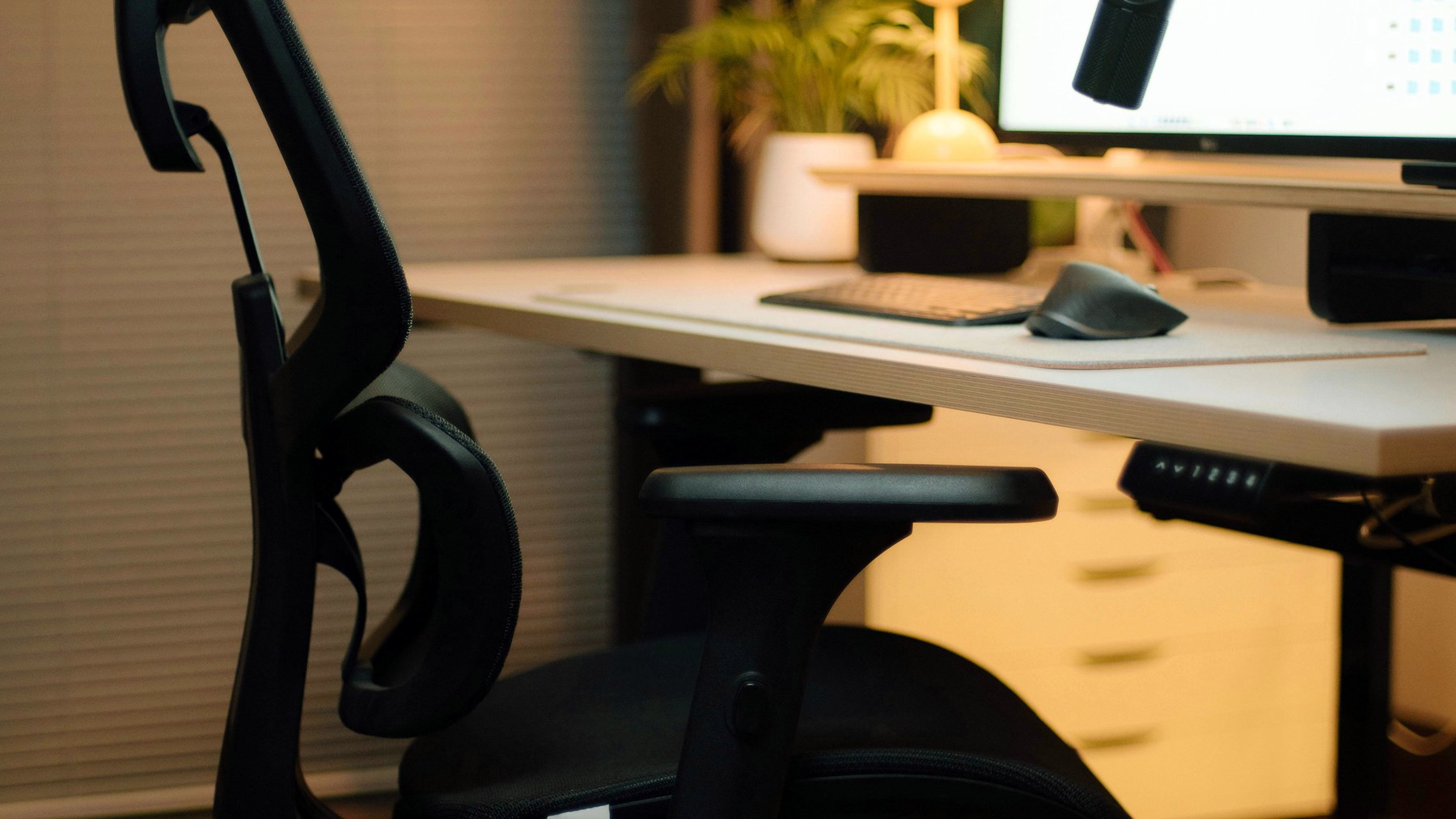
Recovery usually sounds like something that happens after work: stretching, walking, sleeping, turning off notifications. Those things matter. But the workspace itself can either support recovery throughout the day or make recovery harder by constantly adding small strain.
A chair that supports you, a screen at the right height, light that does not tire your eyes, and tools that reduce repetitive tension can make the workday less physically loud. You still work. You still use effort. But the environment stops charging extra.
Micro-recovery matters
Between tasks, the body looks for a reset. You lean back after sending a difficult email. You stand during a call. You look away from the screen while thinking. A better workspace makes those resets easier. A poor one keeps you folded, reaching, squinting, or tense even during the pauses.
This is why recline tension, standing presets, monitor position, and clear desk space matter. They are not only about productivity. They shape the body?s ability to release and return.
Reduce the background load
Stress is not only mental. Physical discomfort adds background load. When your neck is tight or your wrists ache, the day feels heavier. The body keeps asking for attention, even if you are trying to focus elsewhere.
Modern ergonomic products can reduce that load when chosen well. A chair can support rest between bursts of focus. A footrest can stabilize posture. A monitor arm can reduce neck strain. A task light can soften eye fatigue. None of these is dramatic alone. Together, they change the texture of the day.
Make comfort normal
Many people treat comfort as a reward for finishing work. The better approach is to make comfort part of how work happens. That does not mean indulgence. It means respecting the body enough to stop designing against it.
A better workspace is a form of recovery because it gives energy back in small amounts all day. It does not make work effortless. It makes work less punishing. That difference is worth building around.