
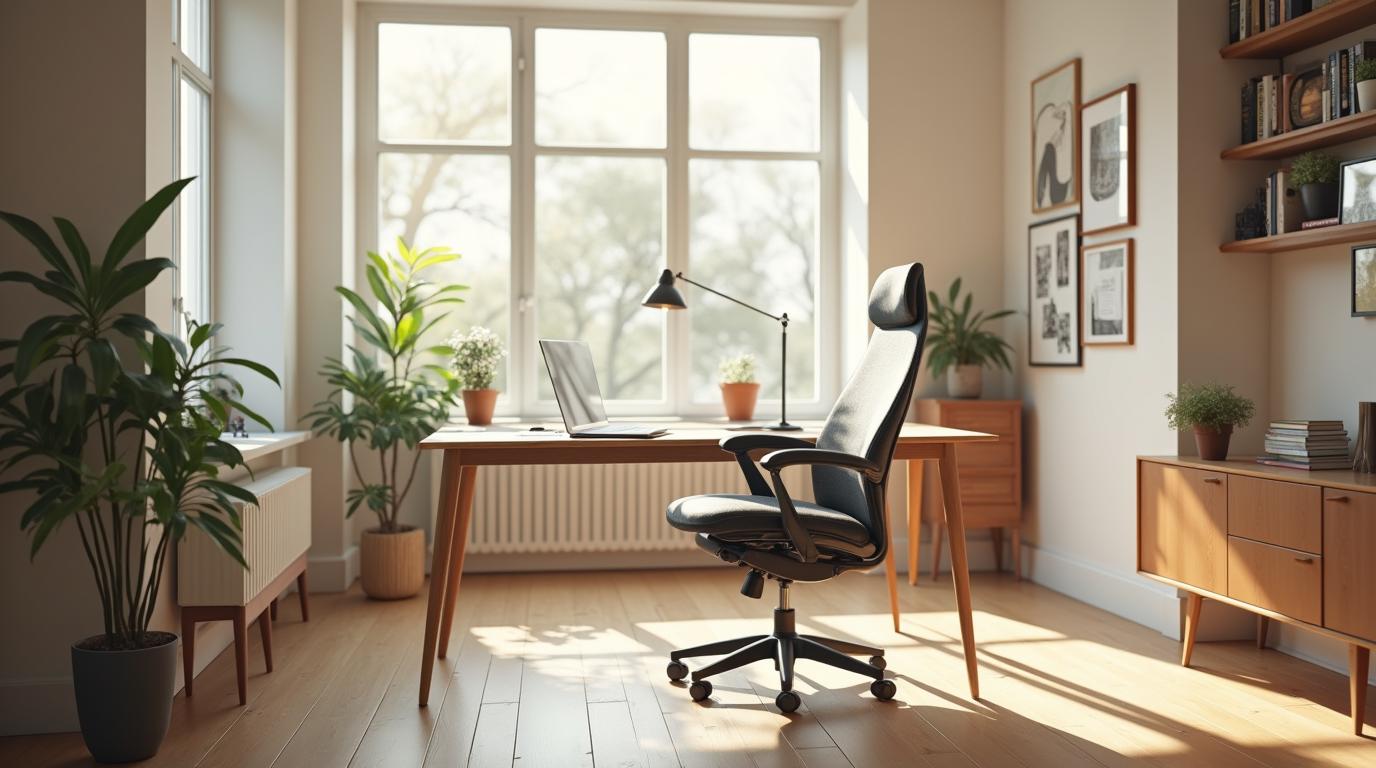
Most people notice a bad chair only when it starts hurting. The sharper truth is that a chair can shape your day long before pain announces itself. It can change how often you shift, how deeply you breathe, how quickly you lose focus, and how much energy you have left when the work is technically finished.
A modern ergonomic chair is not supposed to force you into one perfect pose. That idea is outdated. The body does not want to be locked into a diagram. It wants support, movement, and enough adjustability that your desk stops arguing with your spine. The best chair quietly makes good posture easier while still letting you move like a person.
The small drain you stop noticing
Discomfort is expensive because it is repetitive. A chair that is too deep makes you perch at the edge. A seat that is too low asks your hips and knees to fold awkwardly. Armrests that sit too high raise your shoulders for hours. None of these problems needs to feel dramatic in the moment. Together, they create a background tax on attention.
That tax shows up as fidgeting, shallow concentration, neck tightness, and the oddly specific feeling of being tired while not having done anything physically demanding. This is why the right chair can feel less like a purchase and more like a release. It removes friction you had already normalized.
Support should follow the work
Your chair should serve different modes: deep focus, video calls, casual reading, quick notes, and moments when you lean back to think. Look for adjustable lumbar support, seat height that lets your feet rest flat, enough seat depth for thigh support without pressure behind the knees, and armrests that support relaxed shoulders rather than lifted ones.
Materials matter too. Breathable mesh can be excellent for long hours. Cushioned seats can feel warmer and more residential. A headrest may be useful if you recline often, but unnecessary if you mostly sit upright. Modern ergonomics is not about buying the chair with the longest feature list. It is about matching the chair to your actual habits.
The real goal is less awareness
The best ergonomic upgrade often becomes invisible. You stop thinking about your lower back. You stop rolling your shoulders every ten minutes. You stop negotiating with your furniture. That invisibility is the point.
If you are building a better workspace, begin with the object that touches you the most. A good chair will not fix every work problem, but it can give your body one less fight to manage. That is a practical kind of luxury: comfort that turns into attention.