
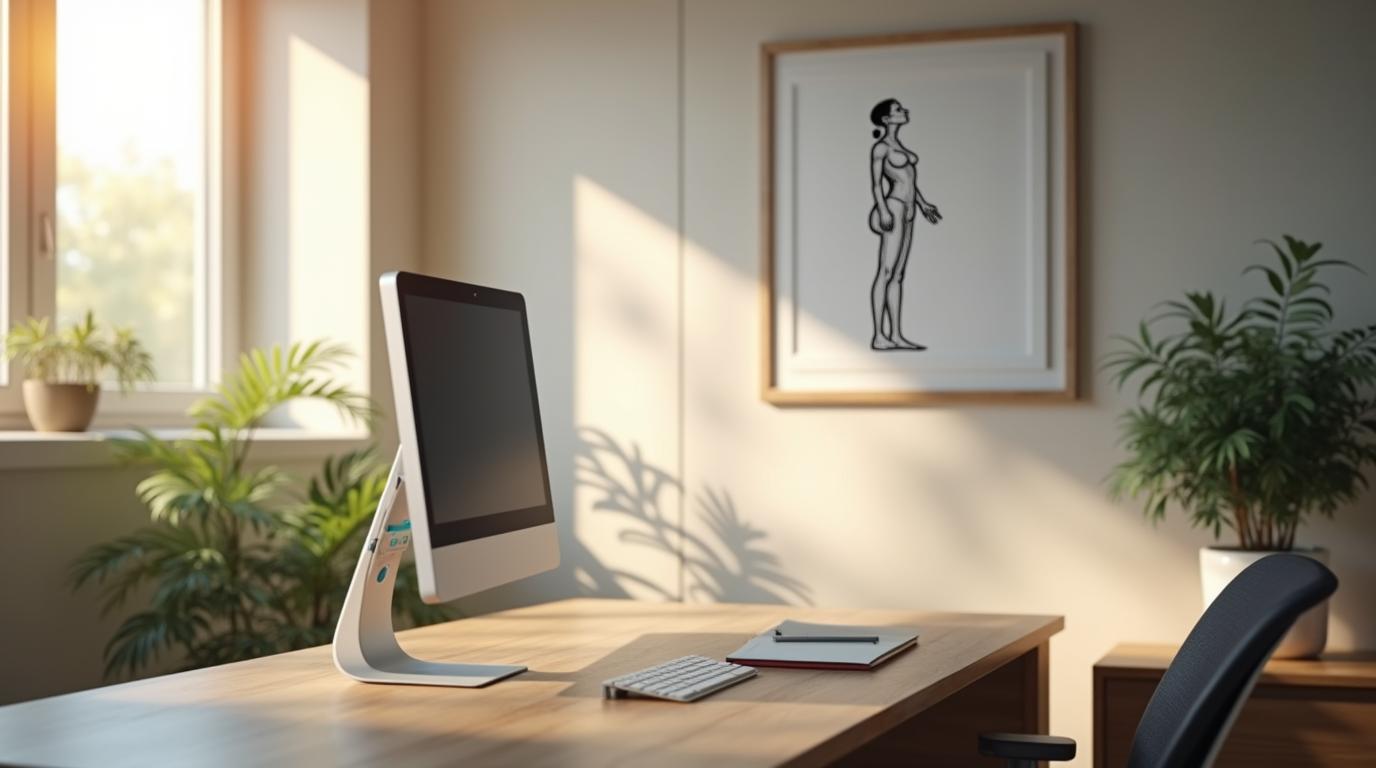
Posture has been marketed as a command: sit up straight, pull your shoulders back, hold the position. That advice sounds simple, but it misses the more interesting reality. Posture is not one rigid shape. It is how your body organizes itself while you do something else.
When your screen is too low, your neck reaches forward. When your keyboard is too far away, your shoulders work harder than they should. When your feet dangle, your lower back compensates. Over time, these tiny adaptations become your default. You do not choose them so much as inherit them from your environment.
Your body and attention are linked
Physical position can influence how you feel during the day. A collapsed posture can make breathing shallower. Raised shoulders can keep the nervous system on alert. A twisted desk setup can create a subtle sense of strain that follows you from task to task. This does not mean posture magically controls mood, but it does mean the body is part of the emotional atmosphere of work.
Better posture is often less about discipline and more about design. Raise the screen so your eyes meet it naturally. Bring the keyboard and mouse close enough that your elbows can rest near your sides. Use a chair that supports the lower back without forcing the chest forward. Give your feet a firm surface. These changes make a calmer posture easier to return to.
Movement beats perfection
The most useful posture is the next one. Even a technically ?correct? position becomes tiring if you hold it for too long. Modern ergonomic thinking encourages position changes: sitting, standing, leaning back, stretching, walking, and resetting. A height-adjustable desk, a footrest, or a supportive chair can all help create more options.
Instead of chasing a perfect pose, notice repeat patterns. Do you crane toward your laptop? Do you tuck one leg under yourself because your seat height is wrong? Do you shrug while typing? These are clues, not failures. They tell you what your workspace is asking your body to do.
Posture as kindness, not correction
The point is not to police yourself. The point is to make the healthy choice feel natural. A well-arranged workspace lets your body settle without constant instruction. It gives you more breath, less tension, and a clearer path back into focus.
Posture matters because you live inside it all day. Treat it as feedback from your environment, and it becomes something you can improve with curiosity instead of guilt.