
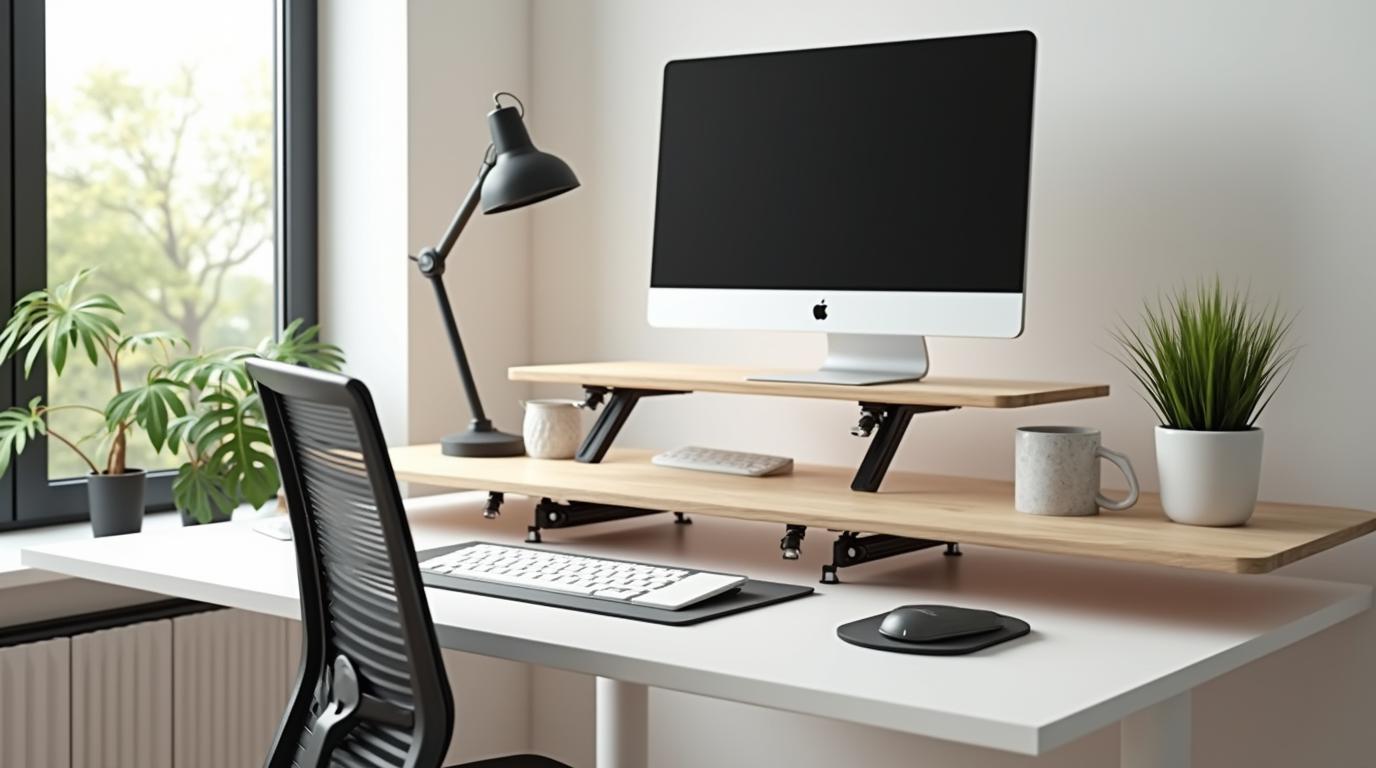
A standing desk sounds like a clean solution: sit less, feel better. In practice, many people buy one, stand enthusiastically for a week, then use it like a normal desk with extra buttons. The problem is not the idea. The problem is treating standing as the goal.
The real value of a sit-stand desk is movement. It gives you another position. It lets you interrupt long sitting without leaving the work completely. It helps you shift energy during calls, reading, brainstorming, and admin tasks. Used well, it expands the day instead of replacing one static posture with another.
Standing still is still still
Standing for hours without movement can create its own discomfort: tired feet, locked knees, lower back tension, and shifting weight from side to side. A standing desk works best when paired with small habits. Change height before you feel stiff. Use a mat. Wear comfortable shoes or stand barefoot if that works for your space. Move while you think.
Some tasks fit standing better than others. Calls, quick reviews, planning, and reading often feel natural upright. Deep typing work may still be better seated for many people. Let the work decide the posture instead of forcing a rule.
Make the transition effortless
If raising the desk is annoying, you will stop doing it. Memory presets help because they remove friction. Cable management matters because tangled cords make height changes feel risky. A monitor arm can keep screen height correct in both positions. A keyboard tray or adjustable chair may be necessary if the sitting height is not right.
The best standing desk setup is boringly easy to change. One button, stable surface, everything still aligned. That simplicity is what turns the desk from a gadget into a habit.
Use it as a rhythm tool
Instead of asking ?How many hours should I stand?? try asking ?When does my body need a new shape?? Stand for a morning meeting. Sit for focused writing. Stand again after lunch. Walk for five minutes before returning. The desk becomes part of a wider rhythm of attention and recovery.
A standing desk is worth it when it helps you move more naturally through the day. Not more heroically. Not more performatively. Just more often, with less friction.